
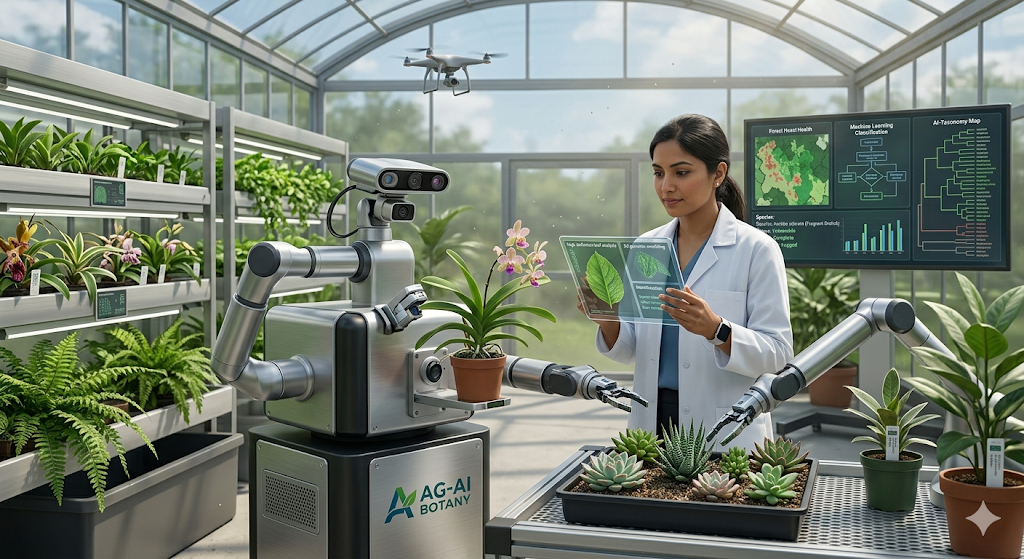
Artificial Intelligence (AI) and the Internet of Things (IoT) are transforming the field of botany by helping researchers monitor plant health, improve agricultural productivity, and protect ecosystems more efficiently than ever before.
In recent years, scientists and agricultural experts have increasingly adopted smart technologies to study plant growth and environmental conditions. IoT devices such as soil sensors, weather stations, and smart irrigation systems can collect real-time data from farms and forests. These devices measure important factors including soil moisture, temperature, humidity, sunlight, and nutrient levels.
The collected data is then analyzed using AI systems. Artificial Intelligence can identify patterns, predict plant diseases, and recommend the best solutions for farmers and researchers. For example, AI-powered cameras are now able to detect early signs of leaf disease before it spreads to other plants. This technology helps reduce crop losses and minimizes the excessive use of pesticides.
Botanical researchers also use drones equipped with IoT sensors and AI imaging systems to monitor large agricultural areas. These drones can quickly scan plantations, identify unhealthy crops, and create detailed maps of plant conditions. As a result, farmers can save time, water, and operational costs while increasing productivity.
Another important application is smart irrigation. AI systems analyze weather forecasts and soil conditions to automatically control water distribution. This approach supports sustainable agriculture by reducing water waste and improving plant growth efficiency.
Environmental experts believe that AI and IoT technologies can also contribute to biodiversity conservation. Smart monitoring systems can help scientists observe endangered plant species in remote areas and detect environmental changes caused by climate change.
According to technology researchers, the integration of AI and IoT in botany represents a major step toward sustainable agriculture and environmental protection. Many universities and research institutions around the world are now investing in intelligent botanical systems to address future food security and ecological challenges.
As technology continues to advance, AI and IoT are expected to play an even greater role in the future of botany, creating smarter, greener, and more sustainable ecosystems for the next generation.